Where Developers Connect
A social media platform for developers to share their knowledge, organize meetups, and share audio content. Made with NextJS 14, TailwindCSS, and Prisma as the primary technologies.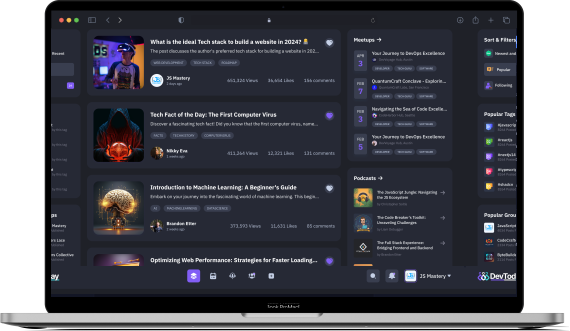
The Team
- Adam Gordon - Content Overview Pages + Sort/Filter/Pagination, Profile Pages, Audio Player, Auth and Onboarding System,
- Darshin Van Parijs - ORM models and database setup, Meetups,Posts,Group pages and Comment Sections, Dark/Light Theming, Google Maps Integration
- Brandon Etter - Project Manager and Code Reviewer
This project was done with the Javascript Mastery Masterclass, and Brandon was our mentor who did code reviews with us and helped us on any concepts that we hadn't mastered yet. The Audio Player and the Content Overview pages are what I'm most proud of in the project.
Tech Stack




Planning
With 9 weeks to do the project, and a long list of user stories on our Asana board to divide and conquer, we each went ticket by ticket - with discussion everyday for 30-60 minutes to catch each other up and go over any blockers.
Goal
To establish a clear project roadmap and choose the most suitable technologies.
Result
Using Asana and common agile processes with check-ins 5 times a week, we were able to smoothly divide the work and keep a pace that allowed us to complete all but 5 or 6 of the 75 or so User Stories
Takeaways
- Team collaboration tools like Asana and daily check-ins were critical in keeping us on track
Authentication / Onboarding
Implemented a secure and customizable authentication system using ClerkJS to handle user sign-ins and sign-ups.
Goal
To integrate a secure, scalable authentication system, that integrates Github and Google OAuth, with an onboarding system to properly set first time users up.
Result
Using a seperate route group (auth) in the app directory, I made a sign-in and sign-up route with a custom design. Using webhooks, Svix, and Server Actions, these goals were accomplished in short order.
Takeaways
- ClerkJS was flexible and customizable, which greatly reduced development time while offering strong authentication features.
- Making a seperate route group for auth made it easier to manage and test the auth system.
Profile Pages
Needed to set up a complex profile page, which displays users personal information, their posts, content of interest, as well as an option to follow/unfollow users.
Goal
For users to have their own personal page that displays all the content they've contributed, as well as links to other platforms they're on.
Result
Starting with the layout, set up a DOM that matched our design, then adding functionality to the page. Using the power of Typescript Types, Prisma's ability to query data easily through either SQL or their own modules, NextJS's server actions, and TailwindCSS convenient and flexible styling, it took somewhere between 2 and 3 weeks to complete this feature.
Takeaways
- NextJS dynamic routing came in handy here in order to load the correct profile page based on the user's ID, as well as editing the profile page. Fetching complex data on the server with the correct custom type was challenging , but mission was accomplished.
Content Overview Pages (Home Routes)
The first thing you see when you load the site, consisting of a center area displaying paginated links to recent content. Sidebars contain previews of content not selected at the time, as well as popular posts of other types.
Goal
Using the momentum I'd gained from working on the auth and profile pages, and identifying the similarities between some of the elements on the profile page as well as projects I've done before, design the DOM, and set up a sorting and pagination system.
Result
Leveraging the power of Prisma's ability to use raw sql queries, and using the URLSearchparams and useSearchParams features of HTML and React, I was able to set up a system that allowed users to sort by date, popularity, and other factors, as well as paginate through the content. I completed it rather quickly and even added some animation to the page using framer motion. I especially am fond of the group cards that fade in and then cascade outward. Using query-strings, I was able to make the page dynamic and responsive to user input.
Takeaways
- Framer motion used in spurts is a great way to spice up the look of a page, but overdoing it can be distracting. The ability to query data on the server and then send it to the client is a powerful tool that can be used to make a page dynamic, fast, and save on resources. Following the pattern of designing the HTML first, then adding the dynamic elements, is a good way to keep the project organized and my workflow on track.
Audio Player
A site wide audio-player that allows users to listen to audio content while they browse the site.
Goal
To create a site-wide audio player that allows users to listen to audio content while they browse the site.
Result
Using a Context Provider, the <audio /> HTML API, and a custom hook, I was able to create a site-wide audio player that allows users to listen to audio content while they browse the site. The player is responsive and can be controlled from any page on the site.
Takeaways
- Using a context provider, I was able to make the audio player site-wide, and responsive. The custom hook I made was able to control the audio player from any page on the site, allowing users to browse other posts while listening to a podcast.
Next Steps
- Rebuild the socket.io server for real-time notifications.
- Optimize the site for SEO to improve search visibility.